Every Week It's Wibbley-Wobbley Timey-Wimey Pookie-Reviewery...
Showing posts with label Hydra Cooperative LLC. Show all posts

Sunday, 1 October 2023

Double OU

Far to the north stands Fort Enterprise, the northernmost outpost of the Murian Empire in Stonespear Province, on the edge of ‘Upper Mastodonia’, a region only revealed decades ago when the giant glaciers that covered the area retreated. Here was the last sighting of the gallant Prince Eyraen, brave warrior son of Syantides, Sorcerer-King of Mur, who departed with his men to descend via nearby entrance into the Underworld and there below, take revenge upon a minor chaos godling known as Shaggath-Ka. Sadly, he has not returned and is presumed lost. Soldiers under the command of Fort Enterprise’s captain went after the prince, but they too failed to return and are presumed lost. Now it is the turn of the adventurers, for it is hoped that a smaller party, one better suited to stealth (or even diplomacy!), might succeed where the troops failed. Not necessarily to find the probably fallen prince, but to return a great magical artefact that he stole from his father’s treasury before he left for the north. Descending down a thousand feet long ladder, the Player Characters will follow in the prince’s wake, discovering fantastic locations such as the ‘Beetletown Welcome Centre and Dwellings’ and ‘Local Franchise Temple of Nul’, regional church of the Cult of the Mindless God and some truly fantastic encounters on the ‘Encounters & Other Random Weirdness’ event table, like being engulfed in a ‘Mutagenic Cloud’ and have their lips gain tentacles, getting to trade with a Slugman on a business trip, or engage in a metaphysical debate with a Woolly Neanderthal on a spirit quest.

This is the set-up for Operation Unfathomable, a high-level dungeon designed to be played by First Level Player Character. Developed from a convention scenario published in Knockspell #5 and published by the Hydra Cooperative, LLC for use with Swords & Wizardry rather than the usual Labyrinth Lord of other Hydra Cooperative, LLC titles, Operation Unfathomable would be a Judges’ Spotlight Winner in the 2018 Ennie awards and as one of the best dungeon adventures of 2018 made the Reviews from R’lyeh Post-Christmas Dozen 2018. Now Operation Unfathomable has returned and once again, you can explore the Jack Kirby-style weird and gonzo Underworld in the company of Blue or Grey Dwarves, Underworld Otters, Citizen Liches, Woolly Neanderthals, and Underworld Rangers, but this time for use with Goodman Games’ Dungeon Crawl Classics Roleplaying Game. Plus, the world up above the Underworld of Operation Unfathomable—the Upper Mastodonia or the Odious Uplands—has been developed to provide a sandcrawl that the Player Characters can explore after their excursion below. All of which has been combined into one volume, Completely Unfathomable.

On one level, the Judge could take Completely Unfathomable and just run Operation Unfathomable. However, Completely Unfathomable includes everything in the original version of the scenario and the Operation Unfathomable Players’ Guide. This includes the new Classes—the Blue Dwarf, which specialises in surveying and repairing the tunnels and ancient machinery of the Underworld; the Grey Dwarf, whose hatred of Chaos godlings has transformed him into an explosives-laying anarchist; the Underworld Otter, a magically-uplifted species whose sense of frivolity and fun often gets him into trouble, including picking locks and pockets; the Woolly Neanderthal, from Mastodonia, who can summon the strength to kill giants and carry out great feats and can survive in the wilderness; the Citizen Lich, really, really hard to kill, unrecognised by any god, enthralls the undead, and capable of only learning the spells they knew in life; and the Underworld Ranger, trained and equipped to fight the Primal Chaos found in the Underworld. There is guidance too if the scenario is to be run as a Character Funnel and the complete ‘Operation Unfathomable’ comic strip. There are details as well, where Completely Unfathomable differs from standard Dungeon Crawl Classics. Fortunately, there are only two. One is that many of the campaign’s arcane spellcasters have magics of their own, necessitating a simple table of effects for all of their spells rather than the Judge having to referring to the multiple spell tables in the Dungeon Crawl Classics rulebook. The other, perhaps more of a fundamental change, is its treatment of Law and Chaos, and the arcane and the divine. It differs from Dungeon Crawl Classics in that Chaos is an intrinsic part of the world rather than an outlook or attitude and that there are no gods. Instead, Clerics are arcane spellcasters who use religious practices and beliefs to cast their spells. This is not say that there are no Patrons in the setting of Completely Unfathomable, as there are, but they are not necessarily divine. The Judge is, of course, entirely free to ignore this.

Of course, the other way to use Completely Unfathomable is have the Player Characters travel to Upper Mastodonia via the massive caravanserais drawn by moustachioed yaks to Fort Enterprise, the heart of government in Stonespear Province. Along the way, they will see herds of mammoths and mastodons, fortified polebarges travelling down river, sabre-toothed apes watching from the forest, and the Chaos Aurora—a scintillating ribbon of light—flickering around Mount Impossible with its doughnut-shaped top. Fort Enterprise, built and governed by a former barbarian-adventurer suffering from middle-age spread, is home to a Wizard’s dormitory, a Tree of Jobs, a beer garden, and docks as well as the all-important Monster Alert Sign which indicates whether Koloko, a giant monster Man-Ape is in the vicinity and whether or not he will attack. It is updated regularly. The Player Characters may find work from the Tree of Jobs, such as putting a stop to Sephilax, the newly appeared Chaos godling before it becomes a real threat or culling the nearby lake of its dangerous kraken population. Of course, once at Fort Enterprise, the Player Characters are likely to find themselves pressganged into going after to Prince Eyraen, an effort fully detailed in Operation Unfathomable. When they return, then they can explore the wilderness spread before Fort Enterprise, that is, if the imperial authorities let them…

Fort Enterprise itself is full of details, NPCs, jobs, and rumours, all of which can be used to nudge the Player Characters to travel and explore. Once they do, they will discover a province pockmarked with generic locations—sites of dead adventurers, fossil sites, fungal blooms, and sabre-toothed ape nests—and named areas. The generic locations are supported with tables used to randomly generate what might be found there, such as the state of the bodies, what killed them, and what might be found there at sites of the dead adventurers or the simple ‘We Search the Fungal Bloom Table’ of the fungal bloom sites. The process is fast and simple, but the Judge may want to develop content of her own here as there are a lot of these sites and the content could easily be exhausted. The named areas of interest, range from the Crab Forest, the Frost Giant Forest, and the Fossil Forest to the Dominion of the Mammoth King, the Underworld Incursion, and the aforementioned Mount Impossible. All begin with a table of encounters—all very nicely detailed—before going on to describe in detail the actual individual areas of interest. Individual areas of interest are relatively small, there being no big dungeon or similarly large location in Upper Mastodonia—only under it—and none amounting to more than ten described rooms.

There are some truly memorable and utterly odd encounters to be had in the Odious Uplands. In the wetlands, the Player Characters might encounter Athohta, the cat-fish god who will talk via the face at the end of her tentacle-tongue and perhaps give aid in the search for and defeat of Sephilax; a tower of enlightenment which was partially buried under stoney debris by the movement of the glaciers, being explored by a rival outfit, which happens to be home to Old man Dinosaur, the ghost of a very old tyrannosaurus rex; Crook-Ah-Ah, Man-Ape Immortal Oracle and Tattooist, who will provide help in defeating Sephilax, but only in the form of tattoos drawn on the Player Characters’ backs; a secret joint invasion by the Science Fungoids and the Nul Cult in a link to the encounters to be had underground in Operation Unfathomable; and the Inn Invisible, an out of time guest house from 1973, Lake Geneva, Wisconsin, which has been turned into a retreat for the nobility and the wizards of the Murian Empire. Throughout, every location and every NPC, encountered is described in succinct, bullet point fashion, engaging presenting descriptions and details in easy to find on the page and easy to digest fashion. For the NPCs, this includes possible motivations and some samples of what they might say when encountered. These in particular, really help the Judge to portray these NPCs.

In addition to Operation Unfathomable and the Operation Unfathomable Players’ Guide, the campaign includes several thorough appendices. These provide the Judge with background information on chaos, the Underworld, and the Beetle Empire, the Temple of Nul and its cult which encourages members to replace their heads with an aerial-like implant that makes them unsurprisingly easy to control, fully detailed hirelings, and ways of replacing the Player Characters should they die. Full stats and details are given for all of the monsters that appear in the Operation Unfathomable and Odious Uplands halves of the campaign, from the Two-Headed Ape Mummy, Sabre-Toothed Ape, and the Giant Bardolph (if you were to think William Shakespeare’s Bardolph* cloned using Science Fungoid technology, then you would be weird, but right) to Vat Goons, Moustachioed Yaks, and Worm Soldiers. Numerous items of equipment, devices, and treasures are detailed, starting with the Anti-Chaos Pills the Player characters need to take to survive the Underworld, whilst new spells include Send and Receive Magic Missive, Create Newt-Man, and Hell’s Mandibles. Finally, Athohta the Catfish God, the Mammoth King, Nul the Mindless God, Sephilax, Shaggath-Ka the Worm Sultan, and others are given as Patrons, should the Player Characters want to pledge themselves to these strange, and not always benign beings…

* Bardolph the Beer Hound, Underworld Ranger, provides an ongoing commentary in Operation Unfathomable on his adventures in the Underworld. He has less or little to say about the Odious Uplands.

Physically, Completely Unfathomable is very well presented. The writing never lets up on being engaging and intriguing, constantly pulling the reader further into the setting and bringing to life the fantastic artwork which appears through the book. It is cartoonish, but heavy and imposing, adding a weight to the world described in Completely Unfathomable.

Operation Unfathomable is a great adventure, constantly veering between the weird and the baroque, never letting its weirdness tip over into silliness and always presenting the Player Characters with an Underworld that is both lived in and strange, but perfectly normal to those that live and work there. With Completely Unfathomable though, it brings the baroque Science Fantasy of Operation Unfathomable to the surface of the Odious Uplands, which have the rough primal feel of a land that has never felt the touch or influence of mankind, waiting to be explored and its secrets revealed even as explorers from below have begun their operations. The Judge is given a wealth of detail, NPCs, hooks, and more to help get started and then she had everything she needs to run a player driven campaign.

Completely Unfathomable is a very good sandcrawl campaign. It has a primeval brilliance that combines the Science Fantasy of Saturday morning cartoons with the sybaritic loucheness of the Melnibonéan empire in a wild, untamed frontier and supports its with plots, hooks, NPCs, monsters, and more aplenty. For the Dungeon Crawl Classics Judge, Completely Unfathomable is great campaign setting that will provide months and months of memorable Appendix N Swords & Sorcery & Science gaming.

Saturday, 5 December 2020

Space Opera Smörgåsbord

Strange Stars: Game Setting Book is a systemless Science Fiction setting book published by the Hydra Cooperative, a publisher best known for its point-crawl fantasy scenarios such as Slumbering Ursine Dunes and What Ho, Frog Demons! – Further Adventures in Greater Marlinko Canton. It is very much written to appeal to the Old School Renaissance, being inspired by the televisual Science Fiction of the seventies and eighties, the works of authors such as E.C. Tubb and Jack Vance, and TSR, Inc.’s first Science Fiction roleplaying game, Star Frontiers, in particular. So, it is generally fairly light in its treatment of the genre. However, it includes more modern elements of the genre, most notably Transhumanism, including authors such as Peter Hamilton and Alistair Reynolds. Being systemless, it would work with Stars Without Number—and there is a rules companion for the Strange Stars setting using Stars Without Number, Savage Worlds, or Fate Core, but this is not as such a complete setting. Instead it details—although not in too much detail—elements of the far future setting, such as peoples, places, and technologies. There is no grand overview and as such is designed as a compendium of ideas and elements that evoke the period feel of its genre. So, there is no grand overview by design, leaving the Game Master and her with the space to fill in the details as necessary. Which means that it is not going to appeal to some gamers, whereas it will others.

It quickly dives into a very short history of the future of humanity. The Radiant Polity has arisen to claim stewardship of paleo-humanity and hyperspace travel following a Dark Age into which the mysterious Zurr crept across planet after planet, and the research-sadists known as Faceless Ones appeared, each of whom would replace their face with a powerful sensory apparatus. The Dark Age is said to have lasted a millennium or more, and to have come about after The Great Collapse of the Archaic Oikumene, a technologically advanced empire which conducted planetary-scale engineering, built floating, crystalline cities, and constructed the hyperspace network. The Archaic Oikumene may or may not have arisen in the cradle of humanity, but true knowledge of the Archaic Oikumene and Old Earth have been lost.

It also introduces three categories of ‘sophonts’—Biologics, Moravecs, and Infosophonts. Biologics, from Paleo-Humanity to Star Folk bioships, include the descendants of organisms—either from Old Earth originally or another world, designed organisms, and bioroids, or biologic androids. Moravecs, named for an Old Earth scientist-prophet, like the warrior-poets of Eridanus or Telosian Moravec-supremacists are self-replicating, sapient robots, whilst the Wanderers, the Wise Minds of Interzone, and the like, are Infosophonts, digital minds independent of physical form.

Interstellar travel is achieved via hyperspace gates which connect star systems—and these routes and their various travel times/speeds are marked on the polity maps throughout the book. No routes are given between these polities, so the Game Master can connect them in any fashion that she wants. What is interesting is that none of the states newly arisen in the wake The Dark Age have knowledge of how to construct starships—certainly not their star drives, which need to be salvaged from ships of the past. 

Six of the polities are given tw0-page spreads each—The Outer Rim, The Alliance, The Instrumentality, the Coreward Reach, The Vokun Empire, and The Zuran Expanse. Each is given a brief description, details of a native inhabitant, and more detailed writeups of its planets or major sophonts. So the Outer Rim, located on the frontiers of space, is dominated by an isolated trio of worlds—Boreas, an ice-covered ocean moon whose native, intelligent coral life have weaponised microbiota that can reanimate the dead to fight back against an invading sophonts, the blue-skinned humanoids known as Uldra; the Fortuna system is a gambler’s paradise and is home to The Wheel, a roulette wheel-shaped space station and Solitaire, a diamond planet; and Gogmagog, where giant robots inexplicably fight each other, the defeated machines scavenged by bot breaker teams for the advanced technology they can sell off world, before von Neumann scuttle out to make repairs! The individual detailed is Yeran Gar, a Djägga—a vaguely feline humanoid—who makes his living as a bounty hunter.

Of the other polities, The Alliance was formed in response to the lawlessness of The Zuran Expanse and religious strife of Radiant Polity, and consists of seven member sophonts, such as the Gnomee, a small hive-like sophonts who mine asteroids, the winged, angel-like Deva dedicated to repairing the ten moon-sized worlds in their home system, and the Neshekk, banking and investment clans who are intensely private. The Instrumentality of Aom is a theocracy home to the Circus, a ring world which is the largest habitat in known space. The Coreward Reach, currently threatened by the Locusts, space borne alien von Neumann machines which devour habitats, was once a major centre of human civilisation, but now lies on the very frontier, and whose worlds include Gaea, a mystery copy of Old Earth and Rune, a medieval world whose sorcerers use magic (or psionic powers) to fight dragons. The Vokun Empire was once fiercely expansionist, but its increasingly corpulent leaders, once great conquerors have turned inward and become obsessed with petty politics, but are still able to field their feared Kuath shock soldiers, each sheathed in a two-and-a-half meter tall bio-suit and use Voidgliders, vacuum-adapted humanoids to sniff out lost hyperspace nodes. Lastly, The Zuran Expanse is a ramshackle, lawless collection of worlds, thought to be the site of Old Earth and is home to the Library of Atoz-Theln and Deshret, a desert world slipping back into what it once was before being terraformed and is worked over by Sandminers sifting for fragments of code and lost artefacts.

Other organisations or groups are not ignored either, whether that is Nomads like the Kosmoniks, traders and occasional pirates who live aboard rune-inscribed spaceships who communicate via sign-language or translators, or the S’ta Zoku, star folk who travel between worlds where they declare great festivals of music, sensory experiences, and more. Threats include pirates, criminals, and hostile sophonts. The pirates include the Zao Corsairs, who operate out of a rogue asteroid and are notorious for capturing and looting ships, holding their passengers to ransom or selling them into slavery—even selling the bodies of the captured passengers separate to their uploaded minds! The criminals include the Pharesmid Syndicate whose members are all bio-clones or mind copies of its founder, terrorist Ulm Pharesm, along with a list of most wanted, whilst the Ksaa and the Ssraad are sophonts inimical to galactic society at large. The Ssraad claim The Zuran Expanse and come in three colours—the Green who launch raids against other sophonts from their orbital stations and whose extending tongues can deliver a paralysing venom, the vicious Red employed as shock troops by the Green and mercenaries for the Blue, and the Blue, who steal ships and technology, and then force captives to remodel before killing them. Lastly, Strange Stars covers psionics—though only in a basic way, gives a pronunciation guide, and suggests some one-line adventure ideas.

Throughout, there is a wealth of tiny details which add to the Strange Stars setting and suggest adventure ideas. For example, the owner of Solitaire organises races run via remote operation and psionic control for the patrons of The Wheel, leases mining rights on the diamond planet, and is rumoured to harbour a data vault deep underground. Opportunities to gamble, race, and even hunt for and break into the data vault all lend themselves to adventure ideas. Similarly, under the description of starships and travel, that the holy grail of any salvager is one of the ancient battleships the size of a city and possessing a sophont mind. There were twelve of these, but some are known to have been destroyed, the others lost.

Where perhaps the Strange Stars: Game Setting Book is lacking is the corporate elements of the setting—there are no corporations in this future. A few scenario more developed hooks would have been nice too and as much as starship travel figures in the setting, you never get a feel for what the ships themselves look like.

Physically, the Strange Stars: Game Setting Book is stunning. The artwork evokes the sources that it draws from, whether that is Stella Starlight, starship captain of the Motherless Child, who all flairs, platform heels, and high collars, looks like she stepped out of a Blaxploitation Sci-Fi film, or Sianna Elizond, Special Operative for The Instrumentality, whose weapon echoes that of Princess Leia Organa from Star Wars, whilst her look is that of Jessica 6, from the film Logan’s Run. The Ssaad are reminiscent of the Slaad of Dungeons & Dragons, whilst the exceptional back cover artwork manages to give nods to the trading cards, electronic game cartridges, and the ‘Choose Your Own Adventure’ books, all of the late seventies and early eighties. The book itself is well written and engaging, and with everything in full colour, it looks stunning.

At first, it is a little difficult to know quite what to make of Strange Stars: Game Setting Book, in the main because it is a book of parts that connect, but remain separate. So initially, it feels as if there should be a whole setting here, complete with histories and grand maps, but for which, thirty-two pages were not enough. That though, is not the point of it being that book of parts and because it is a book of parts,  Strange Stars: Game Setting Book works on two levels. First, as a whole setting, one in which the Game Master can freely inject content of her because there is so much space—figuratively and narratively—to work in. Second, as a source of ideas and elements that she can plunder or be inspired by to add to her own game, and this is made all the easier because the content is compartmentalised throughout—not just in the writing, but in the layout too. Overall, Strange Stars: Game Setting Book is a Space Opera setting rich with ideas ready for the Game Master to develop or source for a setting of her own design. All it needs is the rules set of the Game Master’s choice.

Friday, 21 February 2020

Friday Fantasy: Lorn Song of the Bachelor

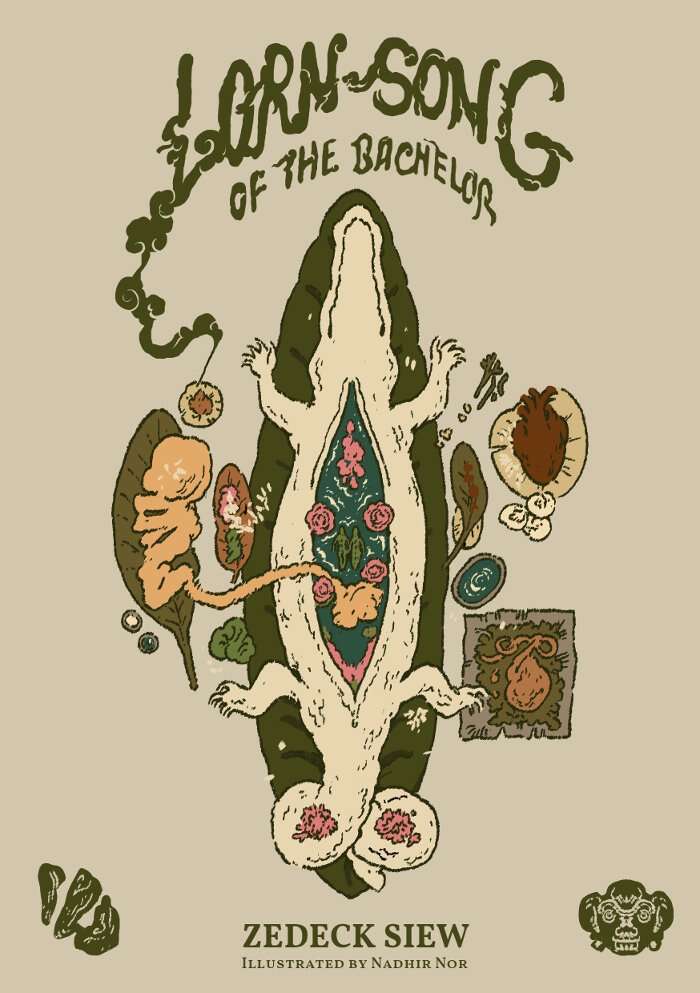
Published by Hydra Cooperative, LLC, Lorn Song of the Bachelor is an Old School Renaissance fantasy scenario for the roleplaying game of your choice. If choosing a retroclone, it works with any that use ascending Armour Class, and in terms of setting, it would work with any which involve elements of colonialism, imperialism, and mercantile adventuring companies, such as the East India Company or the Dutch East India Company. So it would work with Arion Games’ Maelstrom as much as it would Triple Ace Games’ Leagues of Adventure: A Rip-Roaring Setting of Exploration and Derring Do in the Late Victorian Age! or the same setting as Hot Springs Island or that of Crypts of Indormancy. It would also work as far off location in Empire of the Petal Throne: The World of Tékumel. The scenario does also mention the use of firearms, but they are not integral to its play and the Game Master can easily ignore their inclusion.

Obviously, the scenario’s themes of colonialism, imperialism, and mercantile adventuring companies are contentious issues, even difficult ones for some, but the author of Lorn Song of the Bachelor makes clear that they are unavoidable given the legends and history of the region that the scenario is based upon, and that they are open for the players and their characters to explore and make choices about. To that end, no obvious incentive is provided to involve the characters in the situation detailed in Lorn Song of the Bachelor.

Although it is a sandcrawl of sorts, Lorn Song of the Bachelor is quite different to the previous sandcrawls published by Hydra Cooperative, LLC, such as Slumbering Ursine Dunes and Misty Isles of the Eld. It is as far away from the Hill Cantons as can be imagined, being a riverine and dungeon crawl inspired by a story from the island of Borneo. It shares much with the lovely fanzine, MR-KR-GR The Death-Rolled Kingdom—crocodilian gods, forgotten monkey-empires, dangerous waters, and exotic fantasy—and indeed, they share the same author, Zedeck Siew. And just like MR-KR-GR The Death-Rolled Kingdom, Lorn Song of the Bachelor feels humid, sweaty, and sun-drenched, strange, and exotic.

In essence, Lorn Song of the Bachelor is all set-up. At the far reaches of a river, in the lands of the tribe known as the Gleaming Fins, grow great trees from whose heartwood can be extracted a valuable incense, Dreaming Agaru, which aids divination of all sorts with flashes of true inspiration. So the Company sends trade factors and loyal mercenaries—all bad teeth and bad breath—up river to trade and harvest the heartwood of these trees. Yet that trade is threatened by the Bachelor, a giant albino crocodile, which has been the scourge of the river for centuries, having killed all of the other crocodiles. Long has it preyed upon the boats of the Gleaming Fins tribe, upending them and tipping the men into the water to be snapped up. Many times the tribe has hunted the great riverine beast, even killing it, but always it returns. Is the Bachelor a god? Is he immortal? Now it takes the Company’s boats too and so threatens its investments and revenues.

The most obvious way into this for the player characters is to be hired by the Company—akin to Conrad’s Heart of Darkness—but what they will discover is faction upon faction within the lands of the Gleaming Fins. The one-armed, silver painted Vartu Si Sartu, Gleaming Fins chief wants the Company gone; the untattooed, jade finger-nailed and abacus-wielding Company merchant, Machivir Sanna Krau, wants the Bachelor dead; and the wrinkled, incense-infused, firefly surrounded witch and midwife, Sati Wu Sati, wants the curse of the Bachelor on the river lifted and the breaking up of the crocodile cult dedicated to him. These are not the only factions and not the only motivations threading their way through Lorn Song of the Bachelor. The player characters will need to weave their way through these to learn the secrets that lie at the literal heart of the Gleaming Fins territory.

Lorn Song of the Bachelor is presented in a sparse fashion. Descriptions are kept to a minimum, often supported with a table or two of further elements waiting to be found and interacted at each location. There is often a bullet-point or list-like quality to the writing, making it accessible and easy to work with. In terms of scale the adventure really only consists of eight locations, each roughly a half day apart, and a small dungeon of just seven locations, a ruin left over from the Monkey Empire. Here the descriptions are richer and weirder, perhaps even more wondrous.

Of course, the presence of the Bachelor, the albino god-crocodile, lurks throughout the scenario and will become an active threat whenever the player characters are on or by the water. Unsurprisingly, this is very likely to occur given the location of various places in Gleaming Fins territory, and ideally it should, since the Bachelor is mystically linked to parts of this land and should he be hurt, there are repercussions for these locations. This perhaps one of the two weakest parts of the scenario in that it does not seem quite strong enough in effect and will need to be carefully worked in by the Game Master. The other is that the solutions to the scenario, there being several given the number of different factions present in the region, are not clear. Now part of this is intentional, as after all, they should not be obvious, but the players will need to work as hard to get at them as the Game Master will in presenting them.

Physically, Lorn Song of the Bachelor is a lovely little book. It is well written with its peoples and personalities, its places, and its strangeness being described with a very simple economy in terms of its words. Whilst the cartography is clear and strong, the minimum of description in the writing is paired with utterly delightful artwork, light, if not ethereal, ranging from the inhabitants of the Gleaming Fins lands and the weird objects found there to the strange vistas of the Monkey Empire ruin and the bestiary found at the back of the book.

The isolated and exoticism of Lorn Song of the Bachelor does mean that it may not be easy to add to an ongoing campaign, since it may well be far away from the campaign’s main locations. However, that does not stop it from being a lovely little adventure, a mini-sandbox into which the player characters can come and explore and perhaps aid one faction or another. It is simply presented with artwork which evokes so much of the strangeness and exoticism of the Gleaming Fins lands. Although the formatting means it looks simple, there is a lot of detail and flavour to Lorn Song of the Bachelor which together evoke visions of a very different world and of a very different fantasy to which a Western audience is used.

Tuesday, 1 January 2019

Reviews from R'lyeh Post-Christmas Dozen 2018

Since 2001, Reviews from R’lyeh have contributed to a series of Christmas lists at Ogrecave.com—and at RPGaction.com before that, suggesting not necessarily the best board and roleplaying games of the preceding year, but the titles from the last twelve months that you might like to receive and give. Continuing the break with tradition—in that the following is just the one list and in that for reasons beyond its control, OgreCave.com is not running its own lists—Reviews from R’lyeh would once again like present its own list. Further, as is also traditional, Reviews from R’lyeh has not devolved into the need to cast about ‘Baleful Blandishments’ to all concerned or otherwise based upon the arbitrary organisation of days. So as Reviews from R’lyeh presents its annual (Post-)Christmas Dozen, I can only hope that the following list includes one of your favourites, or even better still, includes a game that you did not have and someone was happy to hide in gaudy paper and place under that dead tree for you. If not, then this is a list of what would have been good under that tree and what you should purchase yourself to read and play in the months to come.


—oOo—


Original Adventures Reincarnated #1: Into the Borderlands
Goodman Games $49.99/£38.99
In a year that was not so much nostalgia tinged as nostalgia saturated, 2018 was not so much a case of ‘What’s old is new’, but ‘let’s begin anew’, so the perfect first entry on this list is everyone’s favourite beginning adventure for Basic Dungeons & Dragons—or rather two of them. The inclusion of these two adventures explains why certain modules did not appear in Wizards of the Coast’s Tales from the Yawning Portal, for this weighty tome not only collects B1 In Search of the Unknown and B2 The Keep on the Borderlands—classic scenarios both—but also updates them for use with Dungeons & Dragons, Fifth Edition (though it includes versions of the originals too). Plus, it comes with commentaries on both adventures and further locations which expand the dungeons into mini-campaigns. Together the scenarios offer ‘old school’ adventure updated for the clean and accessible rules of the twenty-first century’s take on Dungeons & Dragons.


Chronicles of Crime
Lucky Duck Games $45.99/£29.99
Board games in which you solve crimes go all the way back to Cluedo (and beyond), but if you were looking for crime-solving game which brings everything up to date, then Chronicles of Crime is what you are looking for. This is a co-operative game in which you will be using your mobile phone to scan QR codes on locations, people, and objects represented by cards in order to look round crime scenes (including in Virtual Reality if you have the glasses), examine clues, interview witnesses, consult experts, and finally explain how the how the murder was done and who did the dastardly deed. In between times, you can discuss the case with your fellow detectives, but for every clue you examine and question you ask, the clock counts down and time is running out. The game comes with five lengthy cases set in London (more cases and crime genres are promised), plus a tutorial case which teaches you how to play—and with Chronicles of Crime App, you really can be playing ten minutes after opening the box. The cleverness of the design means that the games’cards, representing places, people, and clues, can be reconfigured again and again, different for each case, so that each time they tell the story of a different crime, almost like an ensemble cast performing a different play every night (much like the Nero Wolfe television series with Timothy Hutton). Good played solo, great played as a duo, Chronicles of Crime is perfect for anyone who likes a good whodunnit.


Call of Cthulhu Starter Set
Chaosium, Inc. $24.99/£19.99
Every good roleplaying game deserves a starter set, box designed to introduce the game and get everyone playing. Surprisingly, the premier game of Lovecraftian investigative horror, Call of Cthulhu, has never had one—until this year, that is. The Call of Cthulhu Starter Set is a surprisingly inexpensive introduction to the game, but even more surprisingly comes with everything a player—and then his friends—needs to get going and then some more. Not just the rules, dice, and a scenario, but the rules, dice, investigator (player character) sheets—blank and ready-to-play, and a total of four scenarios. These begin with Alone Against the Flames, the solo adventure designed to teach a player how to play Call of Cthulhu, and then build on that with three classic scenarios that in turn are designed to be run by a Keeper with one player, a Keeper with two or more players, and a Keeper and multiple players. In the process, both Keeper and players get to encounter different aspects of the Mythos, enjoy hours of play, and see some classic scenarios updated to Call of Cthulhu, Seventh Edition. (Read the full review here.)


Spire: The City Must Fall
Rowan, Rook, and Decard $50/£35
Spire: The City Must Fall is a roleplaying game of secrets and lies, trust and betrayal, violence and subversion, conspiracy and consequences, and of committing black deeds for a good cause. The players take the role of downtrodden Drow, members of a cell of a rebel movement, The Ministry of Our Hidden Mistress, rising up from the streets as to overthrow their Aelfir, or High Elf masters. As far as they are concerned, their cause is right, but to the state, they are rebels, criminals, and worse, terrorists. The question is, how far will they go to bring about the change they desire, what acts will they commit, who can they trust, who will they betray, and what are the likely consequences? All this takes places in the Spire, a mile-high tower city in a world of technology and magic, using primarily player-facing mechanics that explore the consequences of failure and only reward the players and their characters for making a difference and bringing about change. After all, only the cause and the revolution matter, comrades. (Read the full review here.)


Operation Unfathomable
The Hydra Cooperative, LLC $20/£15.99

Written for use with Swords & Wizardry—but easily adapted to the Dungeons & Dragons-style game of your choice—Operation Unfathomable is a dungeon adventure like no other. It is a gonzo-Jack Kirby-esque high level adventure for low level adventurers in which a dirty dungeoneering dozen must enter the Underworld on the trail of missing royal warrior prince who descended into its depths to find and take revenge upon a minor chaos godling known as Shaggath-Ka. Not necessarily to rescue him, but to retrieve the great magical artefact that he stole from his father’s treasury! This is not a dungeon bash scenario, for bash too hard and the adventurers will get bashed back—even harder, but an adventure in which the party must employ diplomacy, stealth, and knowing when to run away if it is to succeed. At the heart of this adventure are some truly fantastic locations such as the ‘Beetletown Welcome Centre and Dwellings’ and ‘Local Franchise Temple of Nul’, regional church of the Cult of the Mindless God and some truly fantastic encounters on the ‘Encounters & Other Random Weirdness’ on the event table, like being engulfed in a ‘Mutagenic Cloud’ and have their lips gain tentacles, getting to trade with a Slugman on a business trip, or engage in a metaphysical debate with a Woolly Neanderthal on a spirit quest. Essentially a mini-sandbox—or tunnelbox—Operation Unfathomable is wonderfully weird in a fun way. (Read the full review here.)


Mutant Crawl Classics Roleplaying Game
Goodman Games LLC $39.99/£33.99
Continuing both the gonzo theme and the resetting of beginnings, Mutant Crawl Classics Roleplaying Game is essentially a reimagining of the classic 1978 Gamma World using Goodman Games’ Dungeon Crawl Classics Roleplaying Game mechanics. Which means that it is a Class and Level roleplaying game using the d20 System, but with a whole lot of different dice. Explore the post-apocalyptic world of Terra A.D. (‘After Distaste’) and make it a better world for your tribe scavenging the past of a future that never happened as Pure Strain Humans, Mutants, Manimals, and Plantients. It adds some interesting and modern twists, such as replacing the Alignment of Dungeon Crawl Classics Roleplaying Game with alliances with secret societies and linking the ‘prayers’ of the Shaman Class not to a god, but an A.I., each one a holdover from the Great Disaster that struck the Earth centuries ago. This being a ‘Crawl Classics Roleplaying Game’, it means that Mutant Crawl Classics Roleplaying Game does the ‘Character Funnel’ too, shoving handfuls of Zero Level characters through a low-level scenario to see if they survive and so pass a rite of passage into adulthood. Well supported with lots of scenarios, the Mutant Crawl Classics Roleplaying Game is packed with weirdness, horror, and wackiness. (Read the full review here.)

Masks of Nyarlathotep: Dark Schemes Herald the End of the World
Chaosium, Inc. $129.99/£101.99
Already a classic two decades ago, what is regarded as the greatest campaign for any roleplaying game got updated, redesigned, and rewritten in 2018 to make it easier to set up—by introducing the most famous NPC in gaming, Jackson Elias, before the campaign begins; making its multiple plots and clues much easier to follow for the Keeper, if not the players and their investigators; and to take account of its previously stereotypical depictions of its antagonists and follow up thread plots which were previous left dangling… As a result of the new content, the new maps, the new art, and the new advice, it has tripled in size. It remains though, a globetrotting campaign of epic scope, following in the footsteps of an ill-fated colleague and an ill-fated archaeological expedition, which as clues and secrets are revealed, will see the investigators confront different masks of the Crawling Chaos again and again until his current plans come to light. A campaign of herculean proportions, there is at least a year’s worth of great roleplaying to be had in the new edition of Masks of Nyarlathotep: Dark Schemes Herald the End of the World, the new slipcase edition now of size to match! And if the Keeper can run the campaign using the Masks of Nyarlathotep Gamer Prop Set from the H.P. Lovecraft Historical Society, then all the better. (Read the full review here.)

Forbidden Lands
Free League $129.99/£48.99
Legacy games have been a feature of board games ever since Legacy Risk in which the play of the game actually altered both the state and the rules of the game, ultimately turning every copy of the game into a unique copy. Now the idea comes to the roleplaying game with Forbidden Lands, an open-world survival roleplaying game in which the player characters are not the heroes of roleplaying games, but raiders and rogues setting out to stamp their mark on a valley that has long been under a demonic curse. Forbidden from entry for centuries, the curse has recently lifted, leaving a land untouched by mortal hands and ready to be explored, ransacked, plundered, and claimed! The characters will set out to find lost tombs, fight terrible monsters, wander the wild lands, and if they survive, perhaps build a stronghold from which to explore further, but also to defend against the threats which still lurk in the valley or other raiders bent on taking what they have already claimed. As the game progresses, the map of the ‘forbidden valley’ is marked up with stickers showing the players’ and adventurers’ finds and discoveries, so it too will be different from every other boxed set of Forbidden Lands.


RuneQuest: Roleplaying in Glorantha
Chaosium, Inc. $54.99/£42.99
2018 was a both a great and a bad year for RuneQuest and Glorantha. Bad—and sad—because of the passing of Greg Stafford, the creator of Glorantha, but great because RuneQuest returned home to Chaosium, Inc. and was released in aa attractive new edition along with a systemless supplement presenting its mythology, The Glorantha Sourcebook, and a Dungeons & Dragons-style take upon the Hero Wars in the form of 13th Age Glorantha. At the core of those releases though, is RuneQuest: Roleplaying in Glorantha, an update and redesign of RuneQuest II which combines the passion mechanics of Pendragon – Chivalric Roleplaying in Arthur’s Britain (Greg Stafford’s other truly great design) with the Runes of Glorantha, to make the building blocks of Glorantha’s universe a fundamental part of every player character and help each player bring them into play as part of their character. No longer do characters in RuneQuest aspire to be members of a cult and gain its Rune magic. They start play as initiates and with the mighty magic of their gods, all ready to fight the Hero Wars, to drive the Lunars from their lands, and to assert the myths and stories of their gods.
(Read the full review here.)


Modern AGE Basic Rulebook
Green Ronin Publishing $34.95/£26.99
Since 2010, Dragon Age – Dark Fantasy Roleplaying Set 1: For Characters Level 1 to 5 from Green Ronin Publishing has been putting the action into fantasy with its Adventure Game Engine, the mechanics since released in the form of the Fantasy AGE Basic Rulebook. Now the publisher has updated the mechanics to cover the Industrial Revolution, the here and now, and beyond, presenting a toolkit with which the Game Master can run games in different genres—espionage, horror, urban fantasy, action, post-apocalypse, and more—in different modes of play: Gritty, Pulpy, and Cinematic. Pleasingly, the rules for these modes are placed throughout the book, but very clearly marked for easy recognition. Players get to create and play characters capable of doing action, exploration, and social stunts in play—and so be cool. This is backed up with great advice and tools for the Game Master to help her create adventures of types and in all modern-set genres. The Modern Age Basic Rulebook offers light, fast mechanics and the means run a variety of game types.

Prince Valiant: The Storytelling Game
Chaosium, Inc. $29.99/£24.99
As well as RuneQuest coming back in 2018, the year also saw the return of Greg Stafford’s third great roleplaying game—or rather his first great storytelling game. This is Prince Valiant: The Storytelling Game. Based on the comic strip series, Prince Valiant in the Days of King Arthur, by Hal Foster, this is Greg Stafford’s second, other best attempt at an Arthurian roleplaying game after Pendragon – Chivalric Roleplaying in Arthur’s Britain, in which the players also take on the roles of knights (other options are available in the advanced rules) at the court of King Arthur and set out to do good deeds and be heroes. It uses incredibly simple, even simplistic mechanics, but to those it adds innovations that encourage good roleplaying and shared storytelling by having the players take turns in being a Storyteller (or Game Master) for an episode. These make Prince Valiant: The Storytelling Game look very modern even though it was originally published in 1889! Plus it comes with great advice on playing the game and being the Storyteller, so making it a good introductory roleplaying game as well as a good roleplaying game.


The Fall of DELTA GREEN
Pelgrane Press $49.99/£38.99
2018 was a good year for Delta Green, for not did the setting of modern Lovecraftian investigative and conspiratorial horror get its own roleplaying game from Arc Dream Publishing, it got a roleplaying game which took it back to the cowboy days of the 1960s when peace and love raged in USA, war was waged in in Vietnam, and the Cold War raged everywhere… In this timeframe, both Delta Green and MAJESTIC-12, are rival authorised, but unacknowledged black programs dedicated to investigating the true threat by mankind—cosmic ‘unnatural’ entities beyond our understanding. But where Delta Green wants to contain and destroy, MAJESTIC-12 wants to study and weaponise—and only one will come out on top. Delta Green agents are the last bulwark against threats from within and without, each putting mind and body on the line in order to keep their families, their country, and even the planet not only safe, but ignorant of the true nature of the universe. That does not mean though, that Delta Green agents don’t carry out their missions with a swing.


Art & Arcana: A Visual History
Wizards of the Coast $50/£35
Since this (Post-)Christmas Dozen started at a begining, it seems fitting that it should end by suggesting an everything—or at least an everything of something. For which Art & Arcana: A Visual History fits the bill to perfection. As we enter its forty-fifth year, there have been plenty of good histories about the gaming hobby, such as Designers & Dragons and Playing the World. None though, are quite as pretty as Art & Arcana: A Visual History, which as the title suggests presents the history of the look of Dungeons & Dragons over the course of forty years and more. It takes the reader from the days before Original Dungeons & Dragons to the latest edition, exploring how the look of the game changed. Not just its art, but also its trade dress, but above all the art! There is not a single page in this weighty volume which does not showcase some of Dungeons & Dragons’ best art. Plus the book highlights some of the game’s favourite artists, the evolution of monsters and villains, and more. Alongside the art is a solid history of both art and Dungeons & Dragons, making this more than a book of pictures. Written by both fans and experts, this is as much a visual history as a book of memories and very much a book which every Dungeons & Dragons fan should have on their shelf.


Sunday, 21 October 2018

Weirdness and Wonder

The Hydra Cooperative, LLC is best known for its artfully curated and themed trilogy of scenarios set in the Hill Cantons, a world of Slavic myth, Moorcockian extradimensional intrusions, and Vancian swindlers and petty bureaucrats. They are Fever-Dreaming Marlinko: A City Adventure Supplement for Labyrinth Lord, Slumbering Ursine Dunes, and Misty Isles of the Eld. Although set in the same world, each of a quite singular nature and very different to each other in tone and feel. The latest release from The Hydra Cooperative, LLC is yet again, another scenario of a singular nature. Published following a successful Kickstarter campaign, Operation Unfathomable is an adventure unlike any other, in an underworld unlike any other, and unlike any other adventure, it is one-part sandbox, one-part high Level scenario for First Level characters.

Developed from a convention scenario published in Knockspell #5 and designed for use with Swords & Wizardry rather than the usual Labyrinth Lord of other Hydra Cooperative, LLC titles, the set-up for Operation Unfathomable is quite simple. The player characters are at Fort Enterprise in Stonespear Province, the northernmost outpost of the Murian Empire where they are conscripted by the local government for a mission of the utmost importance. Recently, the gallant Prince Eyraen, brave warrior son of Syantides, Sorcerer-King of Mur, led a band of men through a nearby entrance to the Underworld and descended into its depths to find and take revenge upon a minor chaos godling known as Shaggath-Ka. He has not returned and is presumed lost. Soldiers under the command of Fort Enterprise’s captain went after the prince, but they too failed to return and are presumed lost. Now it is the turn of the adventurers, for it is hoped that a smaller party, one better suited to stealth (or even diplomacy!), might succeed where the troops failed. Not necessarily to find the probably fallen prince, but to return a great magical artefact that he stole from his father’s treasury before he left for the north.

So that is that, then. On a mission they cannot refuse and equipped with the odd magical item or two, and forewarned by a map of the prince’s progress recovered from the depth, the player characters have to descend—quite literally down a thousand foot ladder—into the Underworld and go chasing after a McGuffin. And to be fair, as far as the plot is concerned, that really is all there is to Operation Unfathomable. Yet there is a whole lot more to the scenario than this all too simple plot and it all comes down to one simple idea: the journey is better than the destination.

This journey is built around two, rich, meaty strands. The most obvious of the two consists of the Underworld’s encounter areas. There are barely more than twenty of these, such as a ‘Beetletown Welcome Centre and Dwellings’, long abandoned outpost of the extinct Beetle Empire with its wheezing beetle statue and strange hamster ghosts; ‘Science Fungoid Experimental’, manned by the joyfully happy Science Fungoids; and ‘Local Franchise Temple of Nul’, regional church of the Cult of the Mindless God, whose priests transform its most willing worshippers into loyal, headless antenna-necked soldiers. Each one of these locations is detailed and interesting, but where Operation Unfathomable really comes alive is with the other strand—the ‘Encounters & Other Random Weirdness’ on the ‘Master Event Table’. From this one table, a total of some forty-four entries are further divided into three sub-categories/tables, ‘Underworld Phenomena’, ‘Competing Parties & Underworld Travellers’, and ‘Wandering Horrors’. So for example, a party of adventurers might have to run lest they be engulfed in ‘Mutagenic Cloud’ and have their lips gain tentacles, they grow a Moustache of Chaos, or their blood becomes flammable; get to trade with a Slugman on a business trip, or engage in a metaphysical debate with a Woolly Neanderthal on a spirit quest; and take pity on Flaming Hounds or be boggled by the rope tricks of the Cave Swallows. The Game Master is expected to throw these encounters at her players and their characters with some regularity in order to drive the story of their Underworld excursion onwards.

Intrinsic to the setting is the fight between Law and Chaos, this being more apparent in the Underworld as it is closer to the seething mass of mindless Chaos to be found at the centre of the planet. One of the new Classes, the Underworld Ranger, is tightly involved with the ongoing conflict between the two. Similarly, the need for player and player character maturity is also intrinsic to the scenario. The set-up for Operation Unfathomable is that the low level party is following in the wake of a high level party, and although the latter is still missing, presumed lost, it has cleared many of the more dangerous threats along the route marked on the players’ map. This does not mean that the player characters can wander along in the wake of the previous party’s progress, heedless of all possible danger. They will face both high-level and low-level threats, the author making no effort to create a dungeon full of balanced encounters. This gives the limited section of the Underworld described in Operation Unfathomable a naturalistic feel and consequently, the adventurers will need to know what fights to pick and what fights to avoid. This is offset though, by the number of encounters in which the monsters and persons encountered will want to engage in and encourage conversation with them. Not all of them to the player characters’ advantage, of course, but whatever their intentions, this is supported by some great NPCs for the Game Master to portray.

Rounding out Operation Unfathomable is a set of seven appendices. In turn, these describe the Chaos at the heart of the world and short histories of both the Underworld and the Beetle Empire; give a description of the Cult of the Mindless God, a quartet of hirelings, and the means to bring new player characters into play; a whole new Class in the form of the Underworld Ranger, descriptions of monsters, treasures, and spells; and a set of ten pre-generated adventurers (or alternatively, a rival adventuring party). The Underworld Ranger is a member of an organisation dedicated to fighting Chaos in the Underworld who equips him with light-intensifying goggles, an anti-Chaos shortsword, and eventually a Zaracanth Industries ZR-1 ‘Dissuader’ sidearm which shoots a ball of electricity and which must be wound up between shots! The monsters range from the Two-Headed Ape Mummy and the Firebomb Beetle to the Worm Soldier and Worm Surgeon, and include the Blind Antler Man, Chaos Flies, and Bat-Winged Dwarves. Items like the Zaracanth Industries ZR-1 ‘Dissuader’ sidearm and the Science Fungoid’s Death-Ray Revolver have a Science Fantasy feel to them, but most of the Underworld’s treasures simply have a weird feel to them, like the Potion of Advantageous Decapitation which grants the imbiber’s head the ability to separate and float of on its own or the Fizzy Drink of Ocular Autonomy which lets the imbiber’s eyeballs to float off for a while… For the most part, the spells have a fairly workmanlike aspect suited to casting in the Underworld.

Now it should be pointed out that some of the content from the appendices is included in a separate book, the Operation Unfathomable Player’s Guide. This gives the Underworld Ranger Class and its associated equipment as well as the various spells from Operation Unfathomable. It also includes some background for Operation Unfathomable along with the party map and some facts and tips, which are of course, thoroughly useful. It opens with an entertaining cartoon strip which depicts just a little of the oddness to the be found in the Underworld, but its primary new content consists of three new Classes not to be found in the pages of Operation Unfathomable. These Classes are the Underworld Otter, a Fighter or Thief with limited weapon use, oily fur which protects them against oozes, jellies, and the like, and an embarrassing sense of frivolity; the Woolly Neandertal, hairy Fighters with great Strength, but limited vocabulary; and the Citizen Lich, a Wizard who attempted to transform himself in a full Lich, but failed and instead became a minor Lich who is still undead and so is hard to kill, but can be Turned by a Cleric. Raise himself to high enough a Level once again and a Citizen Lich can eventually become a full Lich.

It seems odd not to have three of the Classes from the Operation Unfathomable Player’s Guide in Operation Unfathomable. Nevertheless, these four Classes all suit the setting, the Underworld Ranger Class adding a Science Fantasy element, the Underworld Otter and the Woolly Neandertal adding a primal element, and the Citizen Lich adding a baroque, civilised feel.

Outside of the map of the route taken by the Prince and his entourage, Operation Unfathomable is relatively limited sandbox. There are few places that a wandering party of player characters might actually go, but they are included on the Game Master’s map, even if descriptions of them are not. This is the problem if the adventurers go off piste as it leaves the Game Master to develop these locations on her own. There is certainly the feel that more needs to be written about this region of the Underworld, though the next supplement in the series will be Odious Uplands, which details the region above the Underworld.

Physically, Operation Unfathomable is a striking volume. The writing is engaging—particularly the colourful commentary from Bardolph the Beer Hound, Underworld Ranger, which runs throughout the book, but also each the many encounters and the various locations. The map of the Underworld is both fantastic and fussy, perhaps a bit too fiddley to handle easily at the table. What strikes the reader first about Operation Unfathomble though, is its artwork, somewhat cartoonish, but heavy and imposing, capturing the grandeur of this section of the Underworld.

Operation Unfathomable does a superb job of describing a fantastical environment of the world below as various factions attempt to take control of the area. At times it feels baroque, at times simply natural, but never, ever far from the weird, whether that is in the descriptions of the locations or of the many encounters. And although the scenario’s tone threatens to tip into out and out silliness, it never quite does. The scenario’s plot feels fresh and clever, which when combined with an underground environment detailed as never before, serves to give Operation Unfathomable a singular feel. Imagine Quentin Tarantino got together with Ralph Bakshi to make a Saturday morning cartoon in which the dirty half dozen were sent down a dungeon on a McGuffin hunt and the network refused to broadcast it because it was too weird, and that captures the feel of Operation Unfathomable.